Dublin Institute of Technology (renamed Dublin Institute of Technology, or ‘TU Dublin’ for short, with effect from 1 January 2019) was founded in 1887 and is one of Ireland’s largest universities. The institution is firmly committed to the dual development of education and research, offering programmes ranging from undergraduate to doctoral levels, and enjoys widespread international recognition. It was ranked amongst the top 100 in the Times Higher Education’s 2014 Young University Rankings. The university currently comprises six faculties, including the Faculty of Arts, the Faculty of Business, the Faculty of Tourism and the Faculty of Food Management, and has over 21,000 students, including more than 1,000 international students.
Throughout its history spanning more than 100 years, TU Dublin has consistently emphasised the practical application of knowledge, and its graduate employment rate has consistently ranked among the highest among Irish higher education institutions. The university’s curriculum is designed with career development as a priority; its teaching approach emphasises small class sizes, engaging learning, diversity and internationalisation.
Its training model emphasises close integration and interaction with industry, and features a distinctive ‘internship’ programme that ensures a seamless transition from the classroom to practical experience. The university’s tourism programmes include Tourism Marketing, Events and Exhibition Management, Leisure Management and Hotel Management, with degrees available from undergraduate to doctoral level. The current Dean of the School is the Lifetime Chair of the Governing Board of the International Association of Tourism Educators. The university boasts a teaching staff with both industry experience and research expertise, and its academic influence ranks among the highest among Irish universities.
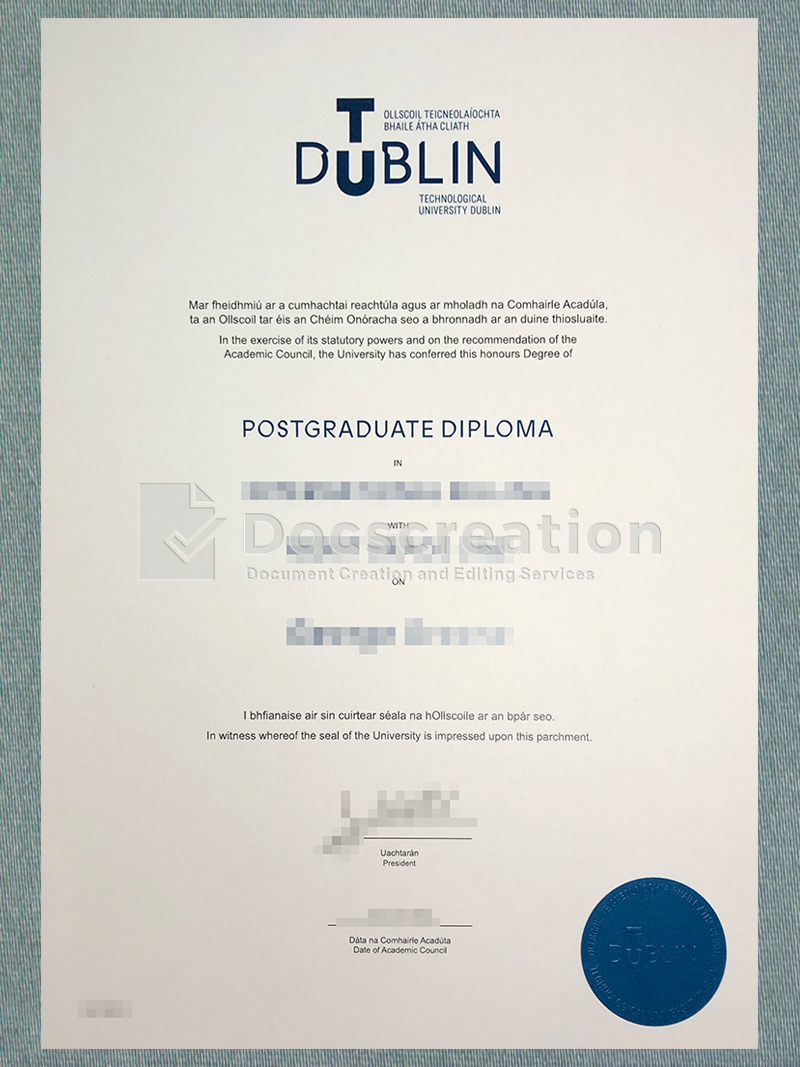
The value of a Dublin University of Technology Postgraduate diploma
The value of obtaining the Dublin Institute of Technology (DIT) Postgraduate Diploma lies, first and foremost, in the fact that what you learn can be directly applied in the workplace. The university takes a practical approach, with courses designed around real-world problems; graduates’ hands-on skills and problem-solving abilities are honed through hands-on training. The qualification itself serves as a stepping stone in the job market, opening doors to careers in engineering, business management and research. Furthermore, the university’s multicultural environment—where students work on projects alongside peers from different countries—naturally cultivates a broad perspective and collaborative skills, which will prove invaluable throughout one’s future career.